

The Price Scoreboard: Same Brand, Different Universe
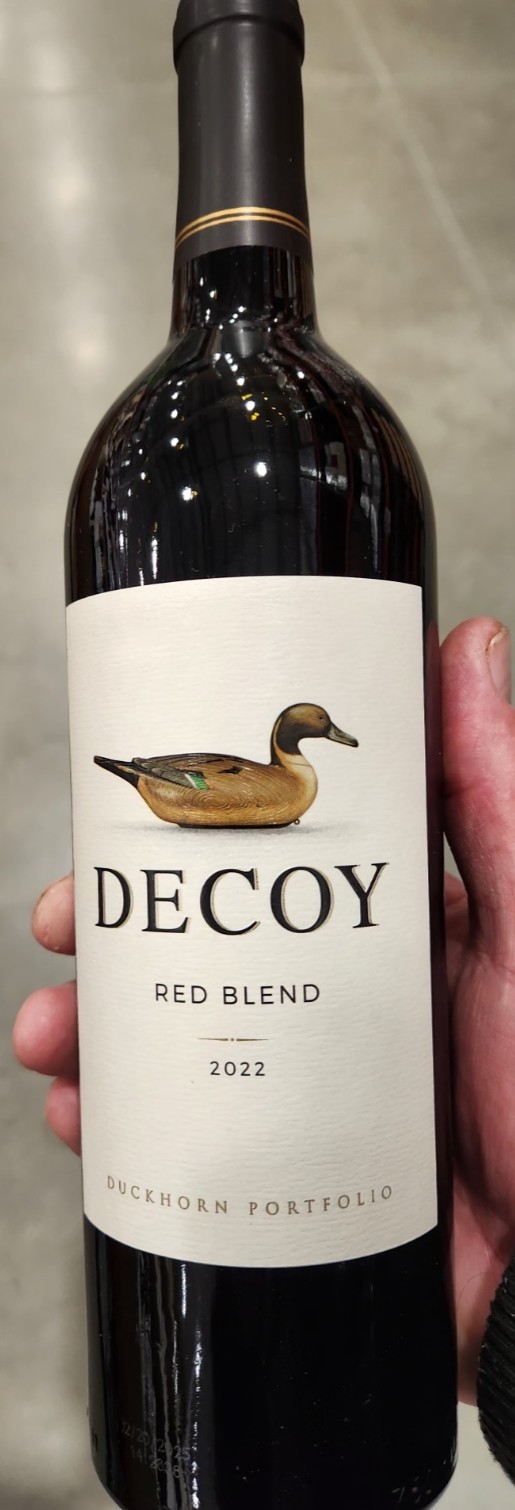
Here’s what your photos show for Decoy Red (Duckhorn Portfolio):
- Local Grocery Store
- Regular price: $29.99
- Sale with card: $20.49
- “Buy 6+” discount: $18.44
- Costco
- Shelf price: $15.89
Now let’s call it what it is:
- Costco is $14.10 cheaper than the local store’s regular price (almost half off in real life).
- Costco is $4.60 cheaper even than the “with card” sale.
- Costco is still $2.55 cheaper than the “buy 6+ bottles” deal.
And if you’re buying for a party, holiday, or just stocking up like a responsible adult who doesn’t want to run out mid-week? Multiply that:
- On a 12-bottle case, Costco can save you about $55 vs the local sale price, and about $169 vs the local regular price.
That’s not pocket change. That’s “cover your gas, grab lunch, and still come out ahead” money.
Quick Reality Check: “Same Wine” vs “Same Brand”
In your photos, the local store bottle shows 2021, and Costco is showing 2022 on the signage/bottle shots. That vintage change is normal for a national brand like Decoy—it moves fast. But here’s the key point:
This price gap isn’t explained by vintage.
Decoy is built to be consistent year-to-year. The style is steady, the branding is steady, and the target drinker is the same: someone who wants a smooth, crowd-friendly red that doesn’t need a lecture.
So when you see a $15.89 vs $29.99 spread, you’re not seeing “quality differences.” You’re seeing business model differences.
Why Costco Can Sell It Cheaper (Without the Wine Being “Cheaper”)
This is where a lot of people get misled. They assume Costco must be getting a “different” version. Most of the time, it’s simpler than that.
1) Costco runs on thin margins (on purpose).
Costco’s whole identity is: make a little, sell a lot. They don’t need a wine bottle to carry the same markup a grocery store often needs.
2) Costco buys big and turns inventory fast.
Fast turnover changes everything. A grocery store might sell a few bottles a week. Costco can sell a stack in a weekend. That speed gives them leverage and keeps holding costs low.
3) Limited selection = lower costs.
Grocery stores often carry a wider wine selection and more one-off SKUs. That looks great, but it costs money (shelf space, slow movers, discontinued items, extra labor). Costco keeps it tighter—more like a disciplined hockey forecheck: fewer players out of position, more pressure, faster results.
4) The membership model subsidizes the deal.
This is the part people don’t want to admit because it sounds too obvious: membership fees help support operations. Costco doesn’t have to squeeze every item for margin the same way many retailers do.
5) Costco uses key items to build loyalty.
Some items are priced aggressively because they create trust. Wine is one of them. You find a few great deals, and suddenly your Costco trip becomes the anchor run for your whole household.
Okay Jeff… But Is Decoy Actually Worth Buying?
Yep—if you buy it for what it is.
Decoy Red Blend is a reliable “everybody’s happy” red:
- Dark fruit vibe (blackberry/plum territory)
- Smooth texture, easy finish
- Friendly enough for pizza night, burgers, chili, meatloaf, tacos, or a charcuterie board that’s mostly cheese and optimism
This is not a “stare at the glass and debate philosophy” bottle. It’s a “pour it while the game is on” bottle.
And honestly? That’s exactly why price matters. If it’s your weekly go-to, you don’t want it priced like a special-occasion Cabernet.
Why Costco Is Worth the Drive for ALL Your Grocery Needs
If you live along the Lakeshore—Grand Haven, Muskegon, Holland, Saugatuck—going to Costco is basically an away game. You commit to it. You plan the trip. You don’t do it for one item.
But here’s the move: you build a smart Costco run so it replaces three smaller, more expensive trips.
What I consistently see as “worth it” categories:
- Wine & spirits (obviously): value is real, especially on recognizable brands
- Meat: steaks, roasts, ribs—great for grilling, smoking, or Sunday dinner
- Seafood: especially if you’re doing simple “lemon + butter” cooking
- Cheese & charcuterie basics: party-friendly, weeknight-friendly
- Coffee, snacks, nuts: stuff you actually go through
- Paper goods & cleaning supplies: boring, yes—also where budgets quietly die
- Frozen staples: quick dinners, appetizers, backup plans
- Olive oil, butter, pantry workhorses: things you’ll use no matter what
- Seasonal deals: gift baskets, entertaining trays, holiday items
- Gas (if you fill up there): it can be the sneaky savings that makes the whole trip “free”
Think of it like building a rugby scrum: you don’t win because one guy is strong—you win because the whole pack moves together. Costco isn’t “worth it” for one bottle. It’s worth it when you stack the cart with the stuff you’ll definitely use.
How to Run Costco Like a Pro (So You Don’t “Lose the Savings”)
Costco can save you money or tempt you into buying a kayak, a 3-pack of inflatable hot tubs, and a pallet of cookies the size of a dining table.
Here’s how to keep it disciplined:
- Go in with a short “must-buy” list (protein, paper goods, coffee, a wine restock)
- Buy bulk only on things you already repeat-buy
- Avoid bulk produce unless you’re cooking for a family or meal-prepping
- Split big items with a friend (especially if it’s just you at home)
- Time your wine purchases around gatherings (host night, game night, holidays)
What I’d Pair With Decoy Red Blend (Real-Life, Not Fancy)
If I’m opening Decoy at home, I’m not making a 12-hour sauce. I’m making something that tastes great without stealing my evening.
- Burgers + caramelized onions (classic, always wins)
- Pepperoni pizza (Decoy is made for this)
- Chili (especially with a little smoky heat)
- BBQ chicken (sweet + savory plays well)
- Sharp cheddar + smoked sausage (simple board, big payoff)
If you want the West Michigan version: grab something to-go after a day near the water—pizza, wings, burgers—and let Decoy do its job.