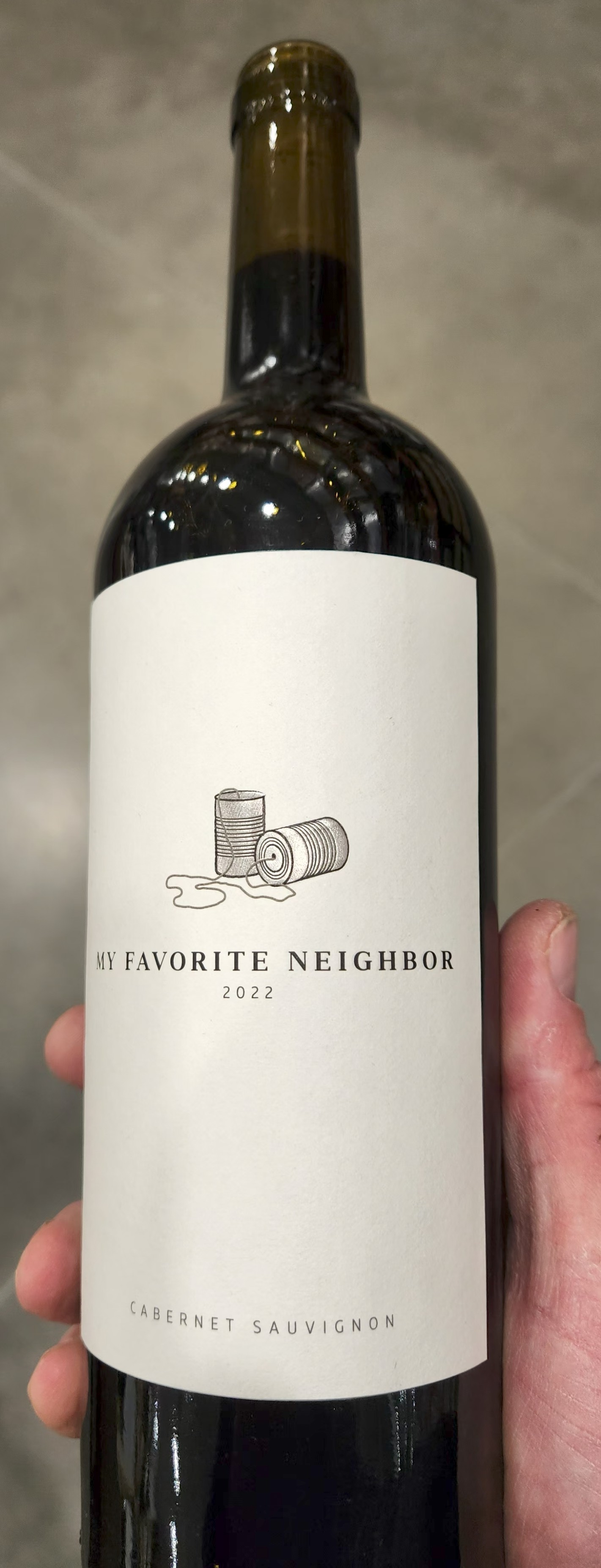


Wine Pairing with My Favorite Neighbor Cabernet Sauvignon
When Spring Pretends to Arrive
Every Midwestern winter has that moment.
One afternoon the sun shows up.
Snow melts.
People start talking about grilling.
Then the next morning it’s 28°F with wind coming straight across the lake.
March has a personality disorder.
The old saying “In like a lion, out like a lamb” exists for a reason.
That’s where this wine enters the game.
Not a winter heavyweight like Napa cult Cabernet that needs a ribeye the size of a snow shovel.
But not a light spring Pinot either.
My Favorite Neighbor Cabernet Sauvignon (2022) sits perfectly in that in-between space. Think of it as the heavy spring jacket of Cabernet—structured, warming, and built to handle lingering cold weather meals.
And when paired properly, it performs like a veteran quarterback in the playoffs.
What Is My Favorite Neighbor Cabernet Sauvignon?
Producer Background
The winery behind this bottle is My Favorite Neighbor, part of the Booker Vineyard family in Paso Robles.
The project was launched by Eric Jensen, founder of Booker Vineyard, alongside longtime wine industry partner Curt Schalchlin.
Paso Robles has become one of California’s most exciting Cabernet regions because of its unique environment.
Region: Paso Robles, California
Paso Robles
Paso Robles is famous for its dramatic climate shift:
• Hot daytime temperatures
• Cool marine-influenced nights
• Limestone-rich soils
That temperature swing—often 40–50°F difference between day and night—creates grapes with:
• Concentrated fruit
• Preserved acidity
• Structured tannins
In wine terms, that means you get power without losing balance.
Vintage: 2022
The 2022 vintage in Paso Robles faced a challenging growing season with heat spikes and drought pressure, but experienced producers adapted with careful vineyard management.
The result:
• Smaller berries
• Higher concentration
• Intense fruit expression
Which plays right into the style of this Cabernet.
Technical Details
Wine: My Favorite Neighbor Cabernet Sauvignon
Vintage: 2022
Region: Paso Robles, California
Alcohol: ~14.8% ABV
Primary Grape: Cabernet Sauvignon
Blend: Primarily Cabernet Sauvignon with small amounts of Petit Verdot and Cabernet Franc (varies by lot)
Oak Program:
• French oak barrels
• Approximately 40–60% new oak
• Aging roughly 16 months
Price: ~$39.99
Professional Ratings
The 2022 vintage earned strong critical recognition.
James Suckling: 92 Points
Critics describe the wine with notes of:
• Blackcurrant
• Cedar
• Tobacco
• Blackberry
• Cassia bark
• Dried herbs
• Leather
The wine is described as medium-to-full-bodied with fine tannins and savory structure.
What This Wine Tastes Like
Pour it into a Bordeaux glass and you immediately see the structure.
Color:
Deep garnet with opaque purple core.
Aromatics:
• Blackcurrant
• Blackberry jam
• Tobacco leaf
• Cedar wood
• Dried thyme
• Leather
Palate:
• Medium-plus body
• Structured but polished tannins
• Dark berry fruit
• Spice and savory herbs
• Lingering oak-driven finish
This is Paso Robles Cabernet done right—rich but not overblown.
Think of it like a linebacker who can also run a 4.6 forty.
Power with agility.
Pairing Science: Why Cabernet Loves Protein
To understand why this wine pairs so well with food, you have to understand tannin.
Cabernet Sauvignon contains natural phenolic compounds called tannins.
Tannins bind with protein.
When they bind, they soften.
Which means the wine becomes smoother and the food tastes richer.
That’s why Cabernet and steak have been teammates for centuries.
Pairing Principle #1: Tannin vs Protein
Protein neutralizes tannin.
Foods that work best:
• Beef
• Lamb
• Pork shoulder
• Hard cheeses
Without protein, Cabernet can taste overly drying.

Pairing Principle #2: Fat vs Acidity
Fat softens tannin and enhances fruit perception.
That’s why marbled meat works so well.
Fat allows the wine’s blackberry and cassis flavors to shine.
Pairing Principle #3: Salt Enhances Fruit
Salt suppresses bitterness.
A salted steak or roasted meat makes Cabernet taste:
• rounder
• fruitier
• smoother
Best Food Pairings with My Favorite Neighbor Cabernet
Here are three pairings where this wine absolutely shines.
1. Reverse-Seared Ribeye
This is the championship pairing.
Why it works:
• High fat content balances tannins
• Charred crust echoes oak spice
• Protein softens structure
The result is harmony.
2. Braised Short Ribs
Perfect for those chilly March evenings.
The slow braise produces gelatin and fat that round the wine’s structure.
Dark sauce echoes the wine’s black fruit.
This is winter comfort with a spring preview.
3. Lamb with Rosemary
Lamb naturally complements Cabernet.
Add rosemary and you mirror the wine’s herbal character.
The pairing becomes layered rather than competitive.

When Cabernet Fails at the Table
Even great wines lose the game with the wrong opponent.
Avoid pairing this wine with:
• Spicy Thai dishes
• Sushi
• Lemon-heavy seafood
• Light salads
These dishes overpower Cabernet’s structure.
Serving Advice
Serving Temperature
Cabernet should be served 60–65°F.
Too warm and alcohol dominates.
Decanting
This wine benefits from 45 minutes of air.
Oxygen opens the aromatics and softens tannins.
Glassware
Use a large Bordeaux glass.
It allows the aromas of cedar and cassis to expand.
Aging Potential
This wine can age 7–10 years.
With time you’ll see development of:
• tobacco
• leather
• dried herbs
But it is also very enjoyable right now.
Price Reality Check
At around $40, this wine occupies an interesting space.
It’s not a grocery-store Cabernet.
But it’s far below Napa cult pricing.
In terms of value, it performs extremely well.
The Heavy Spring Jacket Analogy
Think about your wardrobe this time of year.
You’re not wearing the full winter parka.
But you’re also not walking around in a T-shirt.
You reach for the heavy spring jacket.
That’s this Cabernet.
It carries enough weight for winter food but enough freshness to signal spring.
Featured Snippet Answer
My Favorite Neighbor Cabernet Sauvignon pairs best with ribeye steak, braised short ribs, and rosemary lamb because the wine’s tannins require protein and fat to create balance.