

When the Price Looks “Too Fast” to Be Real
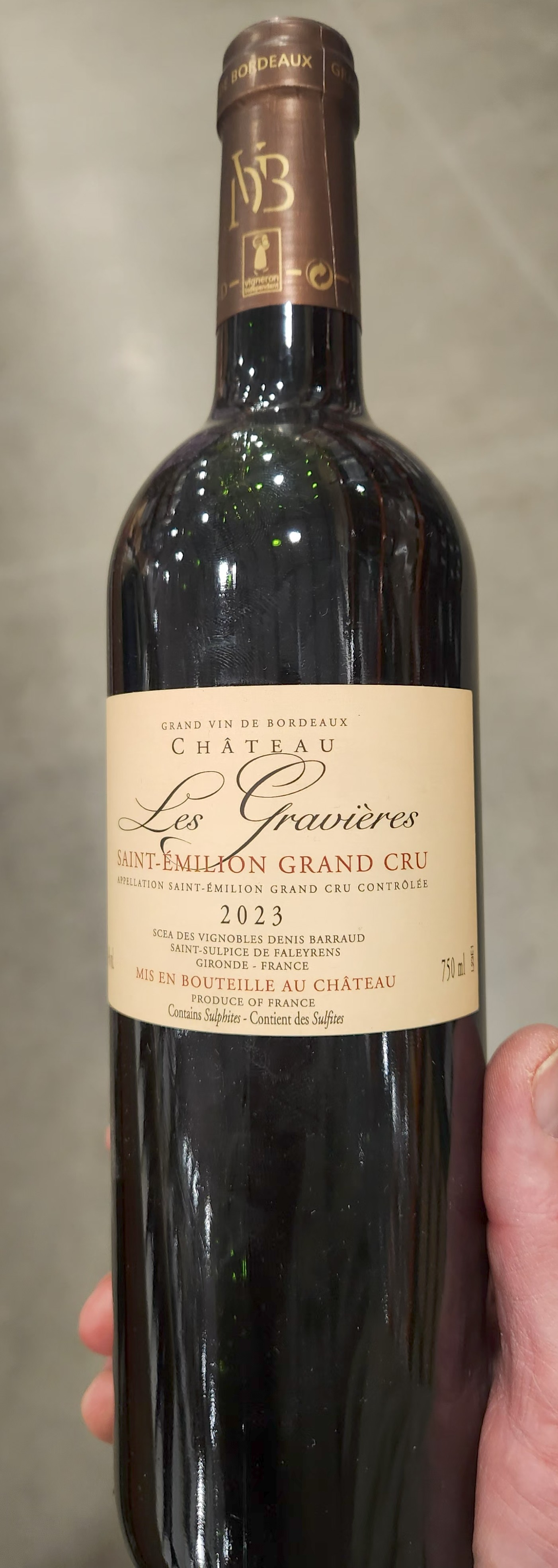
I’m staring at the tag: $20.99 for Château Les Gravières Saint-Émilion Grand Cru 2023. Then I see the score callout: James Suckling 95 points (and yes, Suckling’s site lists the wine and score).
That moment feels like watching a skier tuck and accelerate into a steep pitch. Your brain goes: This is either going to be beautiful… or it’s going to get messy.
Because if you know Saint-Émilion, you know most “Grand Cru” bottlings don’t usually sit in the low 20s unless:
- it’s a sharp retailer deal,
- it’s an aggressive import program,
- it’s a producer flying under the hype radar,
- or the market is just weird right now (it is).
Either way, I’m grabbing a bottle—because value doesn’t announce itself with a marching band. It just shows up quietly and dares you to notice.
What This Wine Actually Is (And Why It Drinks the Way It Does)
Château Les Gravières is Saint-Émilion Grand Cru, and the producer’s own site states it’s 100% Merlot from a 4.5-hectare parcel with sandy gravel/deep gravel and a ferriferous subsoil, plus older vines and low yields.
That matters because it explains the “why” behind the feel:
- Merlot brings the plush mid-palate and dark fruit.
- Gravel tends to keep things firmer, a little more structured, and less jammy than the “soft and easy” Merlot stereotype.
- Lower yields usually show up as concentration—more flavor density, more tannin presence, more everything.
Also worth noting: this estate isn’t a mass-production machine. One detailed profile puts production around ~1,600 cases and notes consulting support from Jean-Luc Thunevin (the Valandraud name carries weight in the Right Bank).
Translation: this isn’t “factory Saint-Émilion.” It’s more like a small-team program with a serious coach on the sideline.
Tasting Breakdown: The “High-Speed Skiing” Personality
Suckling’s public note snippet leans into plummy fruit, red berries, baking spice and a medium-bodied frame.
That’s consistent with what you’d expect from young Merlot on gravel:
- Fruit: plum, black cherry, dark berries
- Spice: cinnamon/baking spice, maybe a little cocoa
- Structure: tannins that are there (not mean, but not invisible)
- Finish: clean, slightly lifted, not syrupy
Now the Lindsey Vonn part: the wine’s “speed” is that ripe fruit + freshness combo. It comes at you smooth and confident—until you push it wrong.
If you serve this too warm, drink it too fast, or pair it with the wrong food, the tannins can feel like catching an edge at 60 mph. Not catastrophic. Just a reminder: this isn’t a cuddly grocery Merlot.
How to Drink It Without Crashing
This bottle is young. 2023 is basically wearing a varsity jacket and acting tough.
Here’s the simple playbook:
- Temp: 60–65°F (don’t pour it at “living room July” temps)
- Air: 30–60 minutes decant does real work here
- Glass: bigger bowl helps the fruit come out and the oak/spice settle
- Timing: If you open it and it feels tight, give it time—don’t fight it
Think of it like downhill training: you don’t just point it straight and hope. You set your line.
The Value Reality Check: Is $20.99 Real, or a Mirage?
Your shelf price is $20.99, and that’s the headline.
For context, Suckling lists an average price (ex-tax) around $23 on the tasting page.
Meanwhile, broader online averages can run higher depending on vintage and marketplace behavior (Vivino shows a higher “average online price” figure for the wine generally).
And at least one futures/6-pack offer has floated near $20/bottle in some channels.
So what does that mean in plain English?
- $20.99 is absolutely credible as a sharp retail price.
- It’s also cheap enough that even if you decide it’s “very good but not life-changing,” you still didn’t overpay.
- If you like Right Bank Merlot with structure, this is one of those bottles that can quietly become a house red.
Food Pairings: Where This Bottle Hits Top Speed
This is not a “sip-alone while scrolling your phone” wine. It can do that… but it wants food.
My favorite West Michigan pairings:
- Grilled burgers (especially with mushrooms or Swiss)
- Venison chili (yep—this is a hunter-friendly Bordeaux)
- Roast chicken with thyme + pan gravy (people forget how good Bordeaux is with chicken)
- Steak tips or tri-tip
- Aged cheddar or Comté (salty + nutty makes the fruit pop)
Avoid: super spicy heat, super sweet sauces, or anything that makes tannin feel harsher.
The Human Side: Why I Like This Producer Story
One reason I respect this label: it’s not some glossy corporate brand pretending to be “heritage.” This is a family operation. One competition profile notes the estate has been family-owned since the 19th century, and that leadership transitioned after Denis Barraud’s death in early 2023 to his nephew/longtime partner.
That’s real-life winemaking. Not vibes. Not a marketing deck. Actual people keeping the wheels turning.