

You walk into a wine shop looking for something honest. Not a statement. Not an Instagram moment. Just a wine that delivers more than you paid for—and actually tastes like someone cared about what went in the bottle.
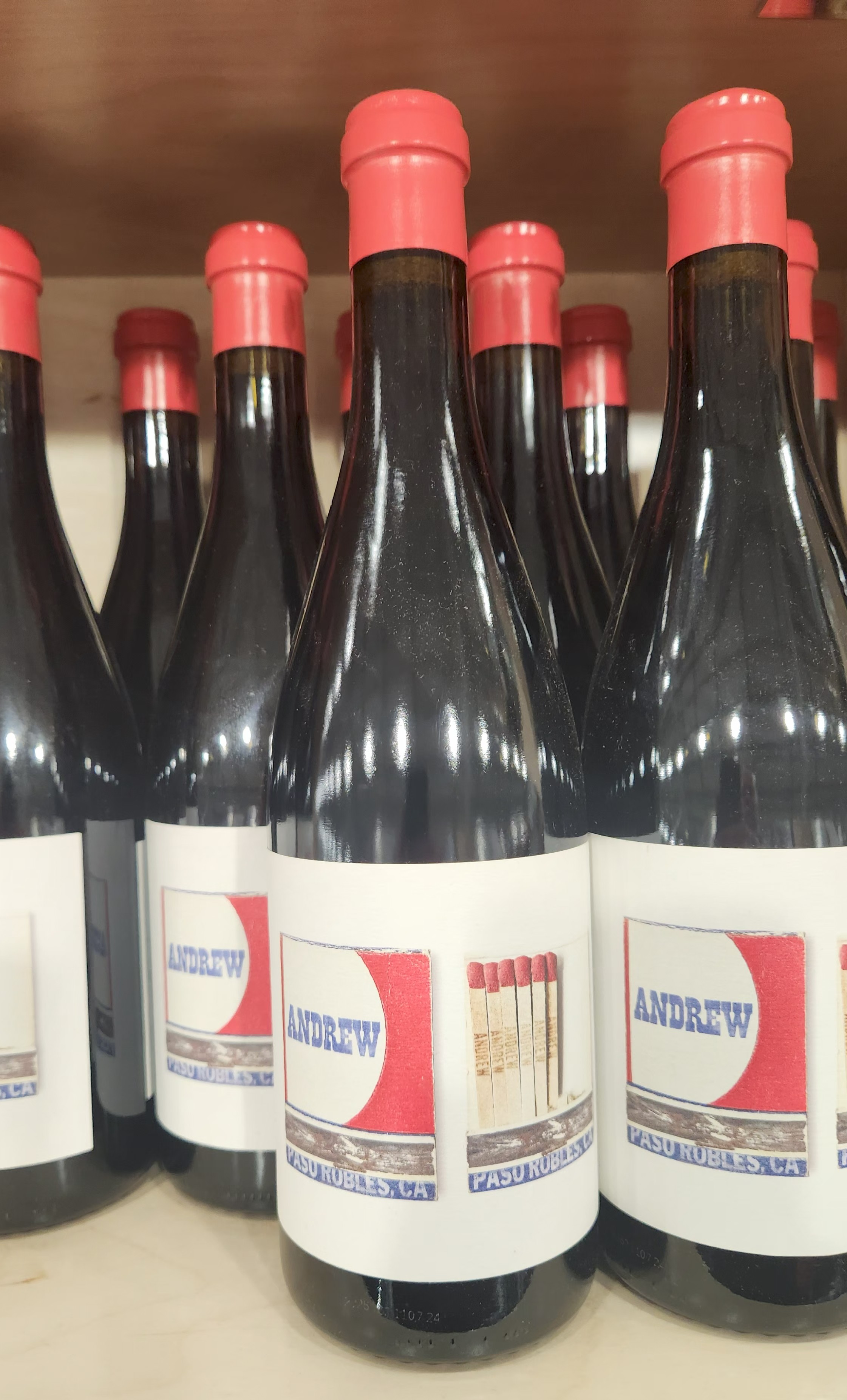
That's Andrew Syrah Paso Robles at $14.99.
I'm not saying this because the price is low. I'm saying this because the wine is good. Honestly good. The kind of good that makes you question why you spent $35 on a bottle last month that didn't perform as hard as this one does.
The Setup: Organic, Unapologetic, Structured
Andrew comes in at 90% Syrah and 10% Petite Sirah—a decision that matters. That 10% of Petite Sirah isn't there as filler. It's structural. It tightens the wine's grip without making it lean or austere. This is someone who understood that in Paso Robles, where the sun is relentless and ripeness comes easy, you need backbone. You need tannin that doesn't feel bullied by alcohol.
The wine is made with organic grapes—no shortcuts, no convenient yield maximization. In a region that can sometimes let ripeness become sloppiness, that commitment to farming practice translates directly to wine discipline.
When Wine Enthusiast gave this 92 points, they saw it. James Suckling pushed it to 93. Wine Spectator landed at 91. That's not scatter; that's consensus. Critics don't align that way by accident.

What You'll Actually Taste
Out of the bottle, this is a big wine. Dark purple almost to black at the core. The nose is floral and peppery first—not what you'd expect from something this fruit-forward. There's minerality under the fruit, the kind that tells you the vineyard had something to say.
The fruit profile hits hard: dried fig, plum, blackberry, blueberry. Then the details: cola, crème brûlée, toasted oak, raspberry. It reads like dessert on paper, but in your mouth it's actually complex. The sweetness is fruit sweetness, not residual sugar playing dress-up. There's black pepper spice that comes through on the finish. Full-bodied, juicy, bold—these aren't exaggerations. This is the wine equivalent of a rugby back: not oversized, but every muscle is doing work.
The acidity? Clean. Bright enough to keep things moving, not so sharp it feels thin.
Why Food Pairing Becomes Simple (When You Stop Overcomplicating It)
Here's what stops most wine drinkers cold: they think pairing rules are absolute. They're not. They're math. And once you understand the equation, the rules become guidelines, and the fun starts.
Andrew Syrah writes its own equation around this one principle: when tannin meets protein, they bind. When acidity meets fat, it cuts. When alcohol meets heat, it amplifies.
Grilled Meat—The Home Run
This is where Andrew doesn't just work. It dominates. Put this in front of a grilled ribeye or wagyu, and the wine's tannin structure locks onto the protein. The fat in the meat softens the tannin's edges. The charred crust? That's sugar meeting alcohol meeting oak—three languages the wine already speaks.
The peppery note in Andrew isn't competing with grill char. It's harmonizing. You get smoke, spice, fruit, and umami all occupying the same space without anyone shouting.
Grilled lamb works identically. Sous-vide short rib? Even better, because the low-and-slow cooking makes the meat silky, which lets the wine's structure shine without overwhelm.
Game and Bold Proteins—Where This Wine Gets Interesting
I won't pretend everyone hunts or eats wild game at home. But if you do—duck confit, venison, wild boar—Andrew is dialed in. The dried fig in the tasting profile creates this unexpected resonance with game's mineral, mineral undertones. The oak softens game's rough edges. The alcohol (somewhere around 14.5%) is high enough to carry the wine's body forward without making you feel like you're fighting anything.
Elk steak with a juniper and peppercorn rub? Now you're using the wine's pepper note strategically. This is pairing science working like a tactical play: every element has a job.
Charcuterie and Cured Meats—The Underrated Angle
Most people pair Syrah with main courses. They miss the aperitif play. Andrew works beautifully with prosciutto, sopressata, aged salami—anything with salt, fat, and umami complexity.
Salt doesn't just work with wine. It transforms it. The salt in cured meat makes the fruit come forward and the tannin recede slightly. The fat in the meat softens what could be a tight finish. The umami—that fifth taste quality in aged proteins—creates resonance with the wine's darker fruit notes.
Pair this with a charcuterie board and fresh bread, and you've got something people will remember. Not because it's complicated. Because it's obvious once you taste it.
Common Mistakes—And How to Avoid Them
Mistake 1: Serving Cold
Andrew at 62°F tastes pinched and lean. At 64°F it opens up. Room temperature (68-70°F) is where this wine actually breathes. The fruit becomes generous. The spice becomes clear. The structure becomes purposeful.
Mistake 2: Opening Without Decanting
This is a young wine. It's still integrating. Twenty minutes in a decanter—that's it—and you'll notice the difference. The tannins soften. The aromatics lift. The wine tastes more confident.
Mistake 3: Pairing With Delicate Fish
This is where Andrew fails. Not because it's flawed, but because delicate white fish has no structural match for this wine's tannin and weight. The wine will overwhelm the protein. You'd be wasting both.
Skip this wine with sole, halibut, or subtle seafood. Save it for robust preparations—grilled swordfish with herb oil, maybe. But even then, you're working against type.
Mistake 4: Assuming Price = Quality
This is the meta-lesson. Paso Robles has reputation for value. Andrew is part of that conversation. At $14.99, you're paying for fruit and farming discipline, not label cache. Accept that premise, and this wine is exceptional. Expect it to taste like a $50 wine, and you'll miss what makes it special.
When Not to Pair This Wine
- Delicate seafood (as mentioned)
- Cream-forward sauces (too much fat without enough protein or umami to anchor it)
- Spicy Thai or Indian cuisine (alcohol amplifies heat; the wine becomes one-dimensional)
- Rich desserts (the fruit sweetness doesn't balance well against chocolate or caramel)
- Acidic dishes like ceviche (acid + tannin = harsh)
When in doubt, ask yourself: Does this dish have protein or umami as a primary feature? If yes, Andrew works. If no, look elsewhere.
The Aging Question
Andrew is drinking beautifully now. It's not built to age 20 years. It's built to drink confidently for 5-8 years. A 2023 vintage will be in prime drinking zone through 2030, maybe beyond. Buy a case at $14.99 and stash half of it. You'll be grateful in three years when prices have climbed and you've got bottles worth $25-30.
Price vs. Retail Reality
Here's the money truth: Andrew retails around $30 at traditional wine shops. You'll find it at Total Wine for $19.99. But if you live near D&W Grand Haven or Costco Fruitport, you're getting it at $14.99. That's not a discount. That's access.
At that price, this wine has no competitor in its class. Period.